
Frequently Asked Questions
Answers to common questions about starting piano lessons at home.
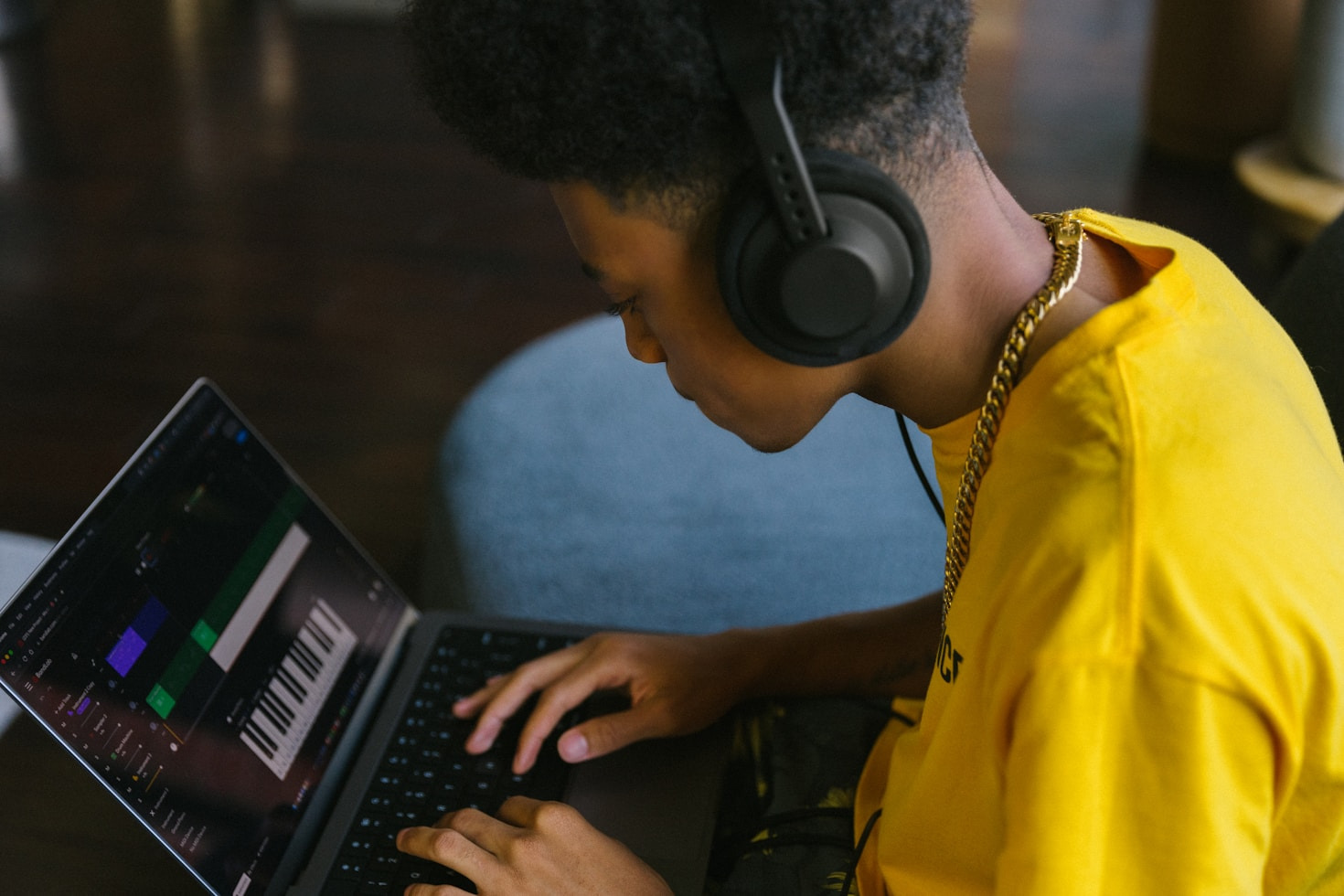
Yes, many self-taught beginners achieve great results at home using structured online courses, interactive tools, and consistent practice habits.
No, complete beginners can start on a 61-key keyboard with touch sensitivity. However, an 88-key weighted digital piano is ideal for long-term progress.
With 20 to 30 minutes of daily practice, most beginners can play simple chord accompaniments and basic melodies within 1 to 3 months.
Sit with a straight back, ensure your bench height allows your forearms to rest parallel to the floor, keep your wrists flexible, and record your posture occasionally on video.
Not necessarily. An entry-level digital keyboard and a self-paced online course cost significantly less than traditional weekly private lessons.
Maintaining practice consistency without a teacher physically present is usually the biggest challenge. Following a structured course and daily routine helps stay accountable.
Continue Exploring Piano Course Advisor
Check out our detailed guides to optimize your home practice environment and course selection.
Sources & References
- Berklee College of Music — Foundational keyboard principles and practice guidance.
- PLOS ONE (2025) — Study on musical learning and cognitive adaptation in older adult novices through home study.
Editorial note: Individual results from learning piano at home depend on consistency, practice quality, and selected course structure.
How to Start Learning Piano at Home: A Step-by-Step Beginner Guide
Discover how to start learning piano at home with a realistic step-by-step roadmap, practical equipment guidance, and a structured practice routine.
Learning piano at home has become easier and more accessible than ever before. You do not necessarily need a dedicated music room, expensive acoustic equipment, or a massive stack of traditional method books to begin.
Understanding how to start learning piano at home comes down to three essentials: a suitable instrument, a clear learning path, and a practice routine you can consistently maintain.
Editorial note: This guide provides a practical blueprint for self-directed study. Adjust your pace and repertoire based on your personal schedule and learning style.
10 Essential Steps to Learn Piano at Home
Step 1: Choose Your Instrument
Decide whether an acoustic piano, digital piano, or electronic keyboard fits your living situation. Consider room space, noise sensitivity, budget, key count, touch sensitivity, and headphone connectivity. A full-size instrument has 88 keys, but beginners can start on quality digital options. Read our piano vs keyboard guide to compare choices.
Step 2: Define Your Musical Goal
Clarify what you want to play before selecting a curriculum. Whether your passion is popular songs, classical masterworks, jazz, blues, ballads, song accompaniment, improvisation, or composing, your personal goal dictates the best learning approach.
Step 3: Choose a Structured Learning Method
A major obstacle in learning entirely from random online videos is lack of progression. Isolated tutorials often fail to show what to study next. A structured course offers a logical sequence that builds skills progressively.
Step 4: Learn the Keyboard Layout
Become familiar with the visual map of the keyboard. Learn to identify white keys, black-key groupings (twos and threes), Middle C, letter names (A through G), and octaves across the instrument.
Step 5: Develop Rhythmic Precision
Rhythm is a foundational pillar of music. Practice keeping a steady pulse by clapping, counting beats aloud, or using a metronome. Playing the correct notes matters little if they are played at the wrong time.
Step 6: Start Developing Both Hands
Two-hand coordination requires patience and deliberate practice. Begin with simple patterns and practice slowly enough to maintain physical control. Berklee’s foundational keyboard instruction emphasizes coordinated two-hand playing as a key milestone.
Step 7: Learn Music That You Enjoy
Repertoire selection directly impacts motivation. Select pieces that are challenging enough to teach new concepts without causing overwhelming frustration. Enjoying your repertoire gives practice a clear purpose.
Step 8: Establish a Consistent Routine
You do not need hours of daily practice to make steady progress. Beginners can start with focused 15 to 30-minute sessions. As discussed in our piano practice frequency guide, consistency outperforms sporadic marathon sessions.
Step 9: Record Yourself Occasionally
Recording your practice using a smartphone provides invaluable objective evaluation. Listening back helps you identify timing errors, uneven dynamics, unwanted pauses, and rhythmic hesitations that are hard to catch while playing.
Step 10: Be Patient and Adaptable
Skill development is non-linear. Scientific studies demonstrate that adult novices without prior background can build substantial musical abilities through sustained, self-regulated practice. Stay patient on frustrating days and keep adjusting your routine.
Can You Learn Piano Entirely Online?
Yes, absolutely. Many core aspects of piano performance can be studied effectively online. However, online study differs from traditional in-person lessons.
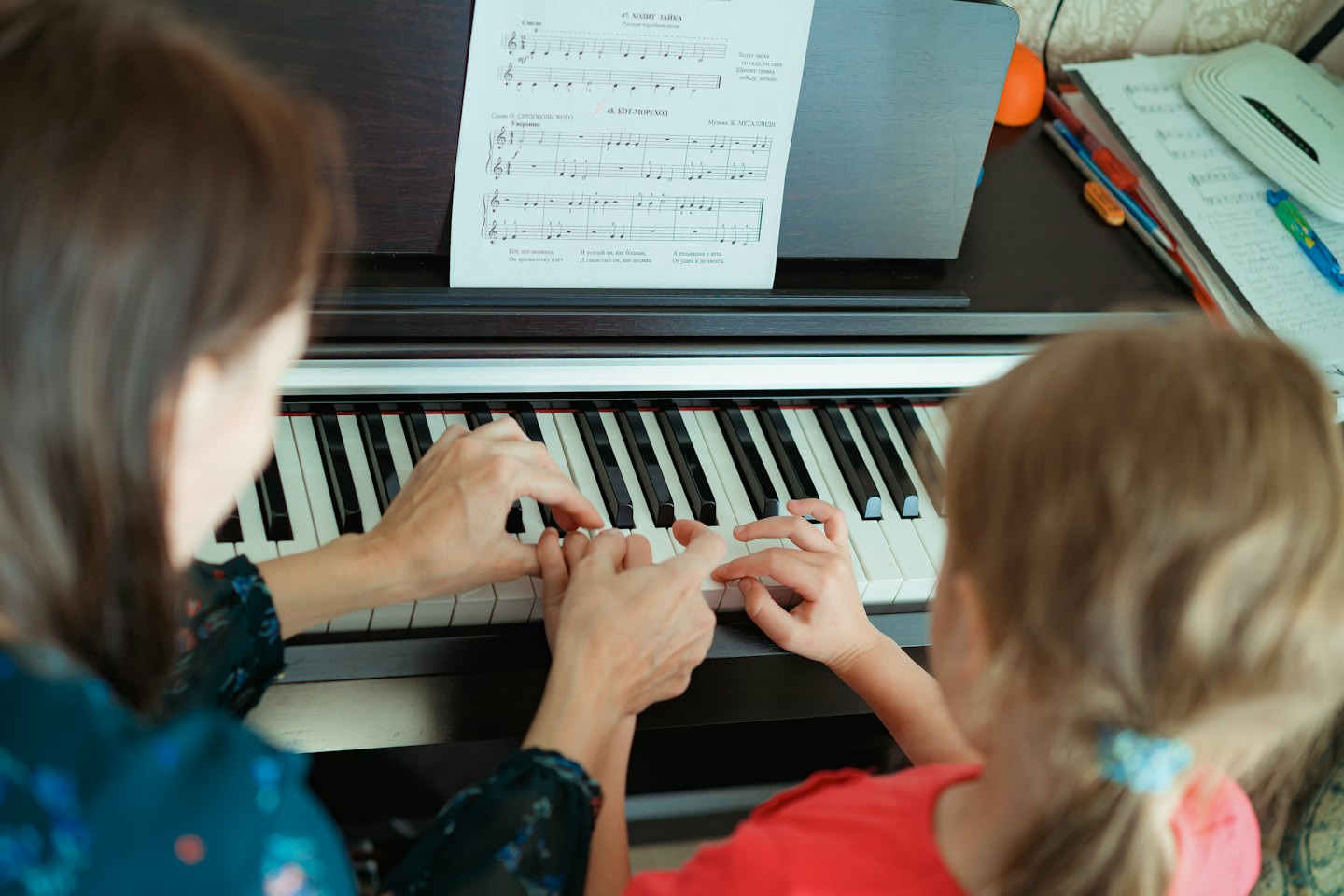
While a private teacher provides live, real-time feedback on posture and technique, online courses offer unmatched schedule flexibility, lower costs, and repeatable video demonstrations. For busy adult learners, that flexibility is often an ideal trade-off. Read our guide on learning piano online as an adult for a complete breakdown.
A Simple Daily Beginner Practice Template
If you are unsure how to structure your daily practice sessions at home, try this balanced 25-minute framework:
5 Minutes — Warm-Up
Get comfortable at the keyboard using simple finger exercises, five-finger scales, or gentle stretching patterns.
5 Minutes — Fundamentals
Focus on a specific building block: note identification, a new chord shape, or a rhythm counting exercise.
10 Minutes — Repertoire
Work through a specific section, phrase, or measure of a song you are actively learning.
5 Minutes — Review
Finish by playing a familiar piece or exercise from a previous lesson to reinforce confidence and memory.
What About Pianoforall for Home Learning?
Pianoforall is a widely recognized online course designed specifically for self-paced independent home study. It requires no previous musical experience and introduces chords, rhythm patterns, playing by ear, and improvisation before progressively teaching sheet music notation.
Its curriculum features 568 step-by-step lessons, over 25 hours of video demonstrations, interactive ebooks, and audio guides. This visual, chord-first methodology suits adult beginners seeking practical playing results at home.
The Bottom Line: Taking Your First Step
You do not need to master every technical detail before you begin playing real music at home. Start with an accessible instrument, choose a structured learning course, establish a realistic schedule, and gradually expand your skills.
The goal is not to learn everything at once, but to make your very next step clear. For adult beginners ready to begin, explore our comprehensive guide on learning piano as an adult or compare courses in our best online piano courses directory.
Frequently Asked Questions
Answers to common questions about starting piano lessons at home.
Yes, many self-taught beginners achieve great results at home using structured online courses, interactive tools, and consistent practice habits.
No, complete beginners can start on a 61-key keyboard with touch sensitivity. However, an 88-key weighted digital piano is ideal for long-term progress.
With 20 to 30 minutes of daily practice, most beginners can play simple chord accompaniments and basic melodies within 1 to 3 months.
Sit with a straight back, ensure your bench height allows your forearms to rest parallel to the floor, keep your wrists flexible, and record your posture occasionally on video.
Not necessarily. An entry-level digital keyboard and a self-paced online course cost significantly less than traditional weekly private lessons.
Maintaining practice consistency without a teacher physically present is usually the biggest challenge. Following a structured course and daily routine helps stay accountable.
Continue Exploring Piano Course Advisor
Check out our detailed guides to optimize your home practice environment and course selection.
Sources & References
- Berklee College of Music — Foundational keyboard principles and practice guidance.
- PLOS ONE (2025) — Study on musical learning and cognitive adaptation in older adult novices through home study.
Editorial note: Individual results from learning piano at home depend on consistency, practice quality, and selected course structure.
Leave a Reply