

Frequently Asked Questions
Common questions about learning piano chords versus reading sheet music.
Chords are generally easier to learn at the beginning because they rely on recognizable shapes and patterns, allowing beginners to play full songs quickly.
No. Classical compositions require reading detailed sheet music to interpret complex polyphonic voices, exact rhythms, and precise dynamics.
Learning just 4 basic major and minor chords (such as C, G, Am, and F) allows you to play hundreds of popular songs.
Not at all. Understanding chords actually improves your sheet music reading by helping you recognize groups of notes instantly on the staff.
A lead sheet is a simplified form of sheet music that shows only the melody line and chord symbols, letting the pianist improvise the accompaniment.
Yes, ear training teaches you to recognize chord qualities (major, minor, 7ths) and chord progressions directly by sound.
Continue Exploring Piano Course Advisor
Check out our guides to compare learning methods and course options.
Sources & References
- Berklee College of Music — Harmony, ear training, and chord accompaniment curriculums.
- ABRSM Examination Syllabi — Classical music reading, sight-reading, and assessment standards.
Editorial note: Deciding whether to focus on chords or sheet music depends on individual preference and goals; neither skill prevents learning the other later.
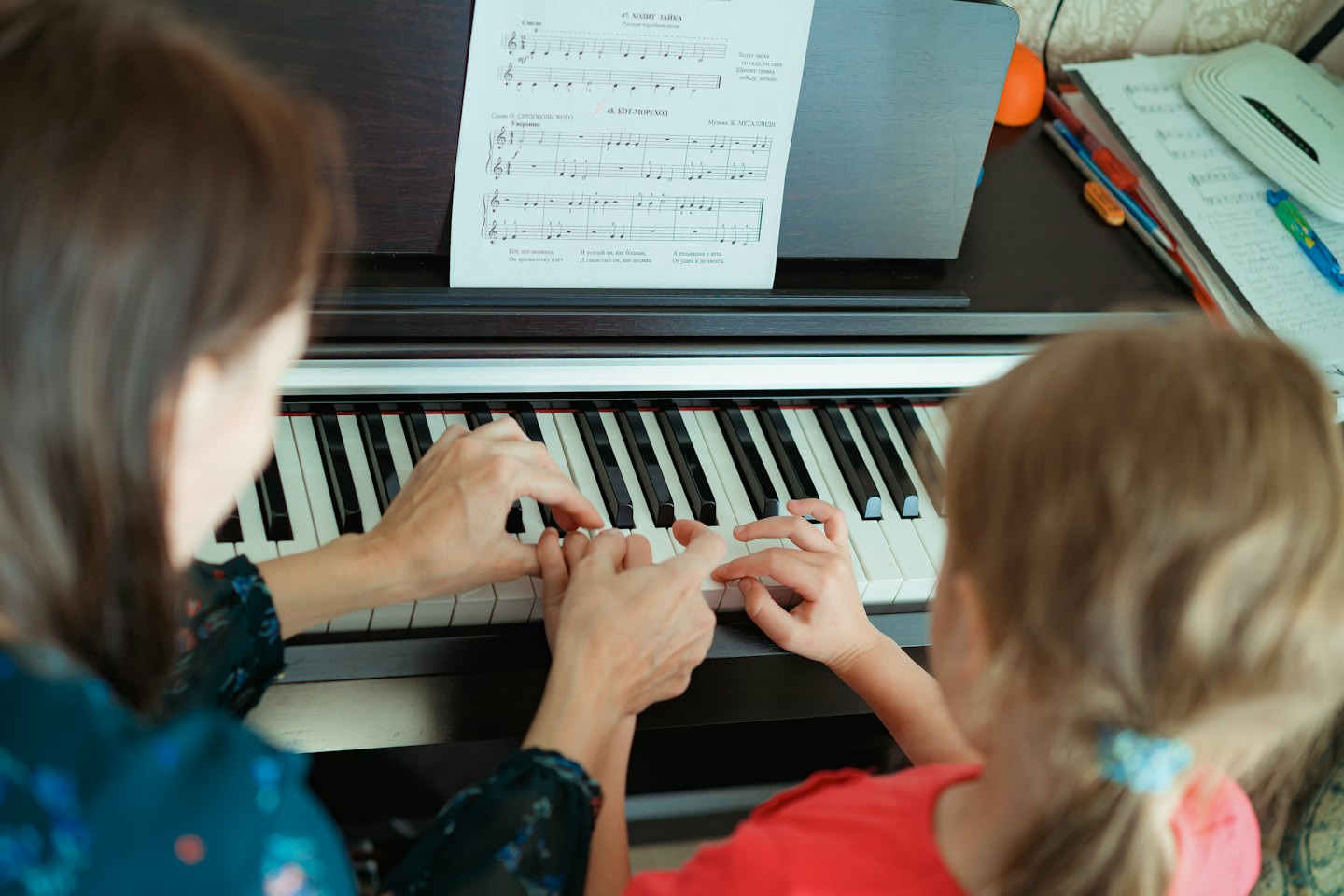
Chords vs. Sheet Music: What Should Beginners Learn First?
Compare learning piano chords versus reading sheet music to discover which skill aligns with your musical style, goals, and practice routine.
Beginners are often told that they need to master traditional notation before they can really learn piano. Others are told to forget reading entirely and learn chords instead. When evaluating chords vs sheet music piano approaches, the reality is far more nuanced.
Chords and music reading are distinct, highly valuable skills. Which one deserves more emphasis at the start depends directly on what you want to play and how you prefer to learn.
Editorial note: Both methods build musicianship. Choosing a starting focus helps you build momentum without limiting your ability to learn the other later.
Understanding the Foundations: Chords and Sheet Music
What Are Chords?
A chord is a combination of notes played together to create harmony. Chords form the structural foundation of vast amounts of popular, pop, rock, and jazz music. Learning basic chord shapes allows beginners to accompany melodies quickly and understand harmonic relationships.
Leading curriculums such as Berklee’s piano resources place strong emphasis on chord construction, harmonization, and accompaniment as core keyboard skills.
What Is Sheet Music?
Sheet music communicates musical instructions visually using treble and bass clefs on a grand staff. Notation tells you exactly which notes to press, when to play them, how long they sound, and how dynamics should be interpreted.
For students focusing on classical repertoire or formal education, reading is essential. Examination boards like the ABRSM include sight-reading to assess comprehensive musicianship.
Why Each Approach Is Useful for Beginners
Benefits of Learning Chords First
Chords offer immediate insight into how harmony functions. Instead of focusing only on isolated individual notes, learners recognize key blocks and relationships.
- Accompanying singers or solo instruments
- Playing popular, pop, rock, and worship music
- Improvising and songwriting
- Creating custom rhythm arrangements
Benefits of Learning Sheet Music First
Notation gives you direct access to centuries of written musical compositions without needing to memorize pieces by ear beforehand.
- Unlocks vast classical literature and exact arrangements
- Preserves intricate compositional detail
- Supports formal exam and academic pathways
- Builds precise sight-reading independence
Do You Have to Choose Just One?
No. You do not need to choose between chords and notation. In fact, a balanced approach develops both simultaneously. A beginner can learn a practical chord progression while observing how those exact notes appear on the grand staff. Over time, these skills reinforce each other.
What About Playing by Ear?
Ear training introduces a critical third dimension. Rather than relying solely on visual instructions, ear training helps you recognize intervals, melodies, and chord progressions through listening. Berklee’s ear-training courses focus heavily on identifying these elements by ear, helping students seamlessly connect what they see, hear, and play.
What Should a Beginner Focus on First?
Select your starting focus based on your main goal at the piano:
Popular Songs & Accompaniment
Starting with basic chords, rhythm patterns, and ear training provides the most immediate, practical results.
Classical Piano & Formal Study
Developing staff reading, proper finger technique, and structured score study early is the ideal path.
Improvisation & Songwriting
Prioritize chord formulas, scales, rhythm variations, and ear training to build creative freedom.
Well-Rounded Musicianship
Begin with a chord- or notation-centered foundation, then gradually introduce the other skill as you grow.
How Pianoforall Approaches Chords and Notation
Pianoforall utilizes chords, rhythm patterns, and ear training as core building blocks. Complete beginners start playing songs right away using visual chord shapes without needing prior sheet music reading skills. Music notation is then introduced progressively as foundational playing confidence grows.
This chord-first method offers an inviting entry point for adult beginners focused on popular music, lead sheets, or song accompaniment, while classical purists may prefer traditional notation-intensive courses.
The Bottom Line
Chords are not a replacement for reading sheet music, and sheet music is not a replacement for understanding chords. They represent complementary facets of music theory and keyboard practice.
For most beginners, the most effective strategy is to start with the skill that aligns with your immediate goals, while remaining open to developing both over time. For more insights on learning methods, read our guide on learning piano without reading sheet music.
Frequently Asked Questions
Common questions about learning piano chords versus reading sheet music.
Chords are generally easier to learn at the beginning because they rely on recognizable shapes and patterns, allowing beginners to play full songs quickly.
No. Classical compositions require reading detailed sheet music to interpret complex polyphonic voices, exact rhythms, and precise dynamics.
Learning just 4 basic major and minor chords (such as C, G, Am, and F) allows you to play hundreds of popular songs.
Not at all. Understanding chords actually improves your sheet music reading by helping you recognize groups of notes instantly on the staff.
A lead sheet is a simplified form of sheet music that shows only the melody line and chord symbols, letting the pianist improvise the accompaniment.
Yes, ear training teaches you to recognize chord qualities (major, minor, 7ths) and chord progressions directly by sound.
Continue Exploring Piano Course Advisor
Check out our guides to compare learning methods and course options.
Sources & References
- Berklee College of Music — Harmony, ear training, and chord accompaniment curriculums.
- ABRSM Examination Syllabi — Classical music reading, sight-reading, and assessment standards.
Editorial note: Deciding whether to focus on chords or sheet music depends on individual preference and goals; neither skill prevents learning the other later.
Leave a Reply